



Drainage Systems
Sustainable Urban Drainage (SUDS)
Agricultural Drainage
Sport & Amenity Drainage
Highway Drainage
Waste Water / Sewerage Drainage
Sustainable Urban Drainage (SUDS)
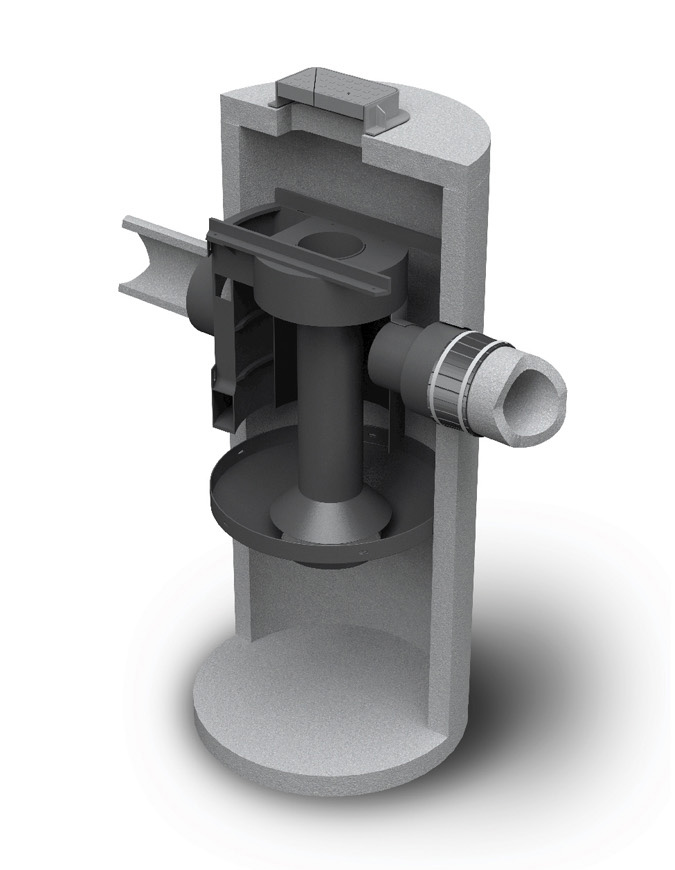
These include a range of mechanisms through which the additional flows generated as a result of development can be controlled, ideally at the former undeveloped rate. They are of simple design requiring a low level of future maintenance with no operational input. They can be effective in controlling flow from relatively small sites and as a contribution to systems serving larger areas. After construction they will often be adopted as part of a development’s open space, and managed accordingly. An increasingly popular means of reducing flow is the appropriate use of permeable surfaces, to driveways, storage areas etc., where a range of available products can be utilised.
Organisations.

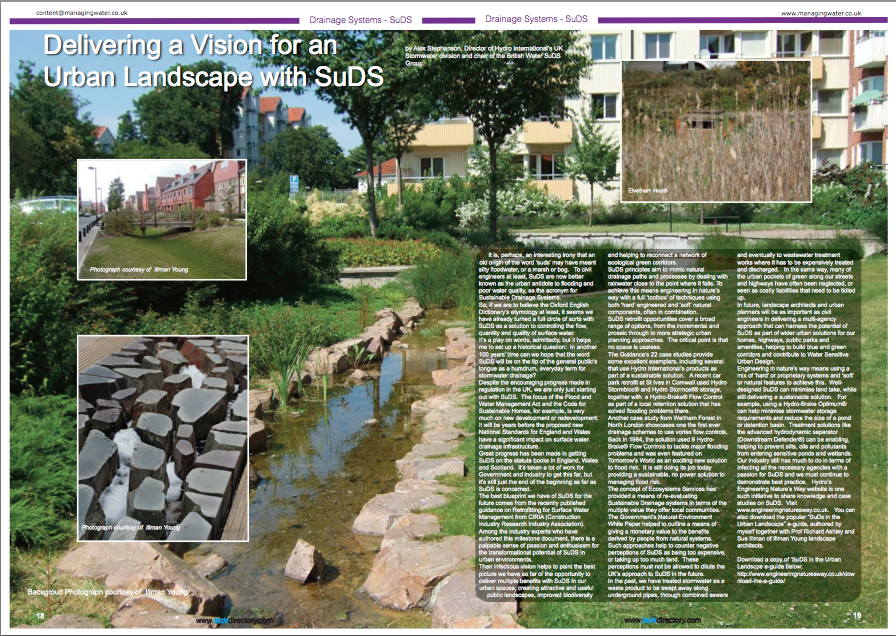
Click the image to view the SuDS feature from Managing Water Magazine - July 2012
Agricultural Drainage
The majority of arable land in the country is dependent on drainage to support crop production. Open ditches are essential, in most soil type areas, to collect and convey water, but the essential control of the water table requires the installation of sub-surface drainage systems.
The work of installing such drainage systems would be undertaken by the individual landowners or Contractors.
Organisations

Sport and Amenity Drainage
Often requiring a higher standard of drainage, due to the quality requirement of the surface level, be it grass, astro-turf, running tracks etc.
Organisations.
Highway Drainage
Systems to collect and convey water from the highway surfaces. Whilst the majority of highways, including virtually all the minor roads, are served by only roadside ditches, the main highways, motorways and other duelled sections, will incorporate more sophisticated systems. Other than for schemes promoted under private sector finance arrangements or those under Local Authority control, the responsibility rests with the,
Highways Agency - England and Wales
Transport Scotland - Scotland
Road Service - Northern Ireland
Waste Water / Sewerage Drainage
Drains convey waste in either solution or suspension. Also known as wastewater flows, sewage is predominately 'used' mains water. Depending on its origin, wastewater can be classed as domestic, commercial, industrial, agricultural or surface runoff.
FOUL DRAINAGE refers to the infrastructure that conveys sewage. It encompasses receiving drains ,manholes, pumping stations , storm overflows, screening chambers, etc. of the sanitary sewer. Sewerage ends at the entry to a sewage works, where it is treated before discharge.
SURFACE WATER can be generated by either rainfall or melting snow in developed areas, be they residential, industrial or commercial sustained use of them is dependent upon what are very often complex drainage systems. Whilst open waterways will be the ultimate recipient of collected water, the means of control and conveyance will be dependent upon sub-surface, mainly piped, systems. On many sites it may be necessary, to incorporate mechanisms, such as storage and flow regulators through which outflow can be controlled.
Developers are responsible for the installation of the site drainage, but the long term responsibility could be transferred to a water company or local authority. The adoption of the infrastructure would be dependent on the site- specific details. Such arrangements will be common throughout existing urbanised areas.